Metal Foundry: Key Benefits for Maritime Applications
Wiki Article
Just How Accuracy Light Weight Aluminum Castings Improve Performance in Marine Engineering
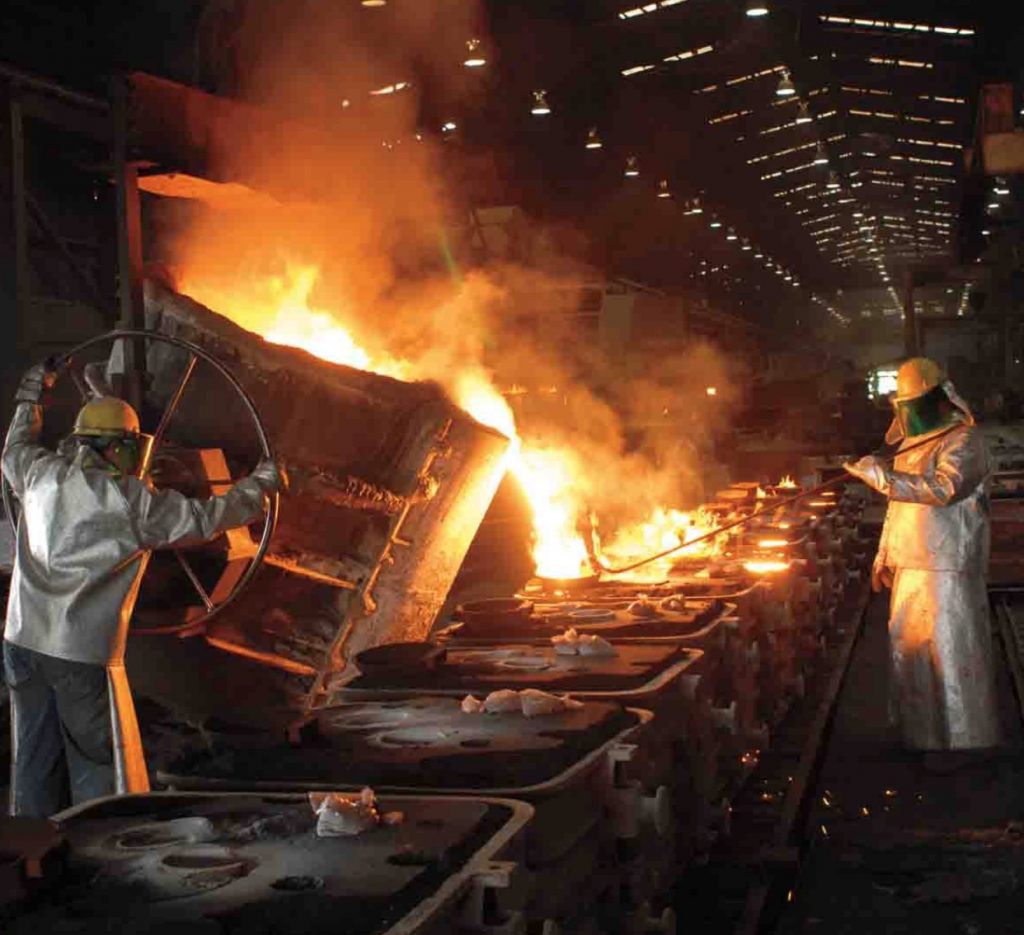
Accuracy light weight aluminum castings play a critical role in advancing marine design. Their light-weight nature adds to improved gas performance and ability to move in vessels. Additionally, the unique buildings of aluminum improve deterioration resistance, making certain resilience in challenging aquatic settings. As the sector looks for ingenious remedies, comprehending the certain applications and benefits of these spreadings ends up being important. The expedition of their influence on structural integrity increases fascinating inquiries regarding the future of maritime innovation.The Benefits of Light Weight Aluminum in Marine Applications
Aluminum's lightweight nature offers considerable advantages in marine applications - Aluminum Foundry. This attribute causes improved gas efficiency, permitting vessels to travel faster and take in less fuel, which is crucial in the affordable aquatic industry. Additionally, the minimized weight adds to boosted maneuverability and security, important for various aquatic operationsDeterioration resistance is another essential advantage of light weight aluminum, especially in deep sea settings. This building expands the life-span of marine parts, lowering maintenance costs and downtime. Light weight aluminum's capability to be easily molded into intricate shapes allows for ingenious designs that enhance efficiency and capability.
The material's recyclable nature aligns with sustainability initiatives in the marine market, advertising eco-friendly methods - Metal Foundry. On the whole, the mix of light-weight style, longevity, and versatility makes aluminum a preferred option for aquatic designers looking for to enhance efficiency and performance in their tasks
Recognizing the Spreading Process

During the casting procedure, careful temperature level control is essential, assuring the light weight aluminum remains in a fluid state until it fills up the mold and mildew entirely. Cooling prices also significantly affect the microstructure of the actors aluminum, affecting its mechanical homes.
After solidification, the actors elements undergo numerous finishing procedures to accomplish the wanted surface high quality and dimensional accuracy. This careful interest to detail assurances that the last products meet strict marine design requirements, eventually improving efficiency popular environments.
Trick Characteristic of Precision Light Weight Aluminum Castings
Precision aluminum spreadings possess an one-of-a-kind combination of residential or commercial properties that make them highly useful in marine engineering. One considerable residential or commercial property is their light-weight nature, which permits enhanced fuel effectiveness and much easier handling throughout installation. Furthermore, aluminum exhibits outstanding rust resistance, especially in aquatic atmospheres where saltwater exposure prevails. This characteristic enhances the long life of parts, lowering maintenance prices and downtime.Accuracy aluminum castings provide high strength-to-weight proportions, allowing the building of robust structures without unneeded mass. Their thermal conductivity is one more benefit, allowing for reliable warmth dissipation, crucial in applications such as engine elements. The capability to accomplish intricate geometries with accuracy spreading approaches additionally gives design adaptability, making it possible for designers to customize parts to details performance requirements. Overall, these buildings jointly add to the boosted performance and integrity of aquatic design applications.
Applications in the Marine Market
Accuracy aluminum spreadings play a crucial role in the aquatic sector, especially in the production of engine elements. Their lightweight yet durable nature likewise adds to cutting-edge hull structure layouts, enhancing overall vessel efficiency. Furthermore, advancements in casting technologies have caused boosted prop effectiveness, supporting the need for greater functional performance in aquatic design.Engine Elements Production
Engine components making plays an important duty in the marine market, where reliability and efficiency are critical. Precision light weight aluminum spreadings are significantly utilized for producing essential engine components, such as cylinder heads, manifolds, and crankcases. These castings supply decreased weight compared to conventional products, enhancing gas performance and total performance. The longevity of light weight aluminum guarantees that components can stand up to harsh marine atmospheres while preserving architectural honesty. The manufacturing process permits for elaborate styles that optimize air flow and thermal monitoring, essential for engine effectiveness. As marine design advances, the fostering of precision light weight aluminum spreadings in engine components manufacturing continues to offer substantial benefits, supporting the industry's need for advancement and sustainability.Hull Structures Style
While making sure security and performance, hull structures layout plays a critical role in the aquatic market, affecting the total performance and maneuverability of vessels. Accuracy aluminum spreadings use substantial benefits in this location, allowing the development of light-weight yet durable hulls. These castings enable for detailed styles that improve hydrodynamic efficiency, minimizing resistance and optimizing fuel usage. Furthermore, aluminum's deterioration resistance contributes to the long life of hull frameworks, minimizing upkeep prices over time. The capability to generate complex geometries through precision casting strategies likewise promotes ingenious designs tailored to certain marine applications. The integration of precision aluminum spreadings in hull structures not only enhances operational capabilities but likewise lines up with advancing sector requirements for sustainability and performance improvements.Propeller Efficiency Improvement
Enhancing Architectural Stability and Weight Decrease
In aquatic design, the strength-to-weight proportion of precision light weight aluminum castings plays an important role in boosting structural honesty while reducing total weight. This beneficial residential or commercial property permits the layout of lighter, a lot more efficient vessels without endangering safety and security or performance. Additionally, aluminum's fundamental corrosion resistance better adds to the longevity and reliability of marine applications.Strength-to-Weight Proportion
The strength-to-weight ratio is an essential consider marine engineering, where structural honesty must be stabilized with weight performance. Precision light weight aluminum spreadings offer substantial benefits in this regard, combining the capacity to stand up to high anxiety while keeping a lightweight profile. This special residential or commercial property enables the design of vessels and elements that are both active and robust, improving general performance. By utilizing aluminum, designers can attain ideal structural integrity without endangering on weight, which is essential for gas effectiveness and rate. Aluminum Foundry. Additionally, a favorable strength-to-weight proportion facilitates cutting-edge styles that may not be possible with much heavier products. Therefore, accuracy light weight aluminum castings play an essential duty beforehand aquatic engineering applications, ensuring sturdiness while minimizing excess weightCorrosion Resistance Benefits
Rust presents a substantial hazard to aquatic frameworks, making rust resistance a crucial factor to consider in product choice. Precision aluminum castings show phenomenal resistance to corrosion, primarily because of their all-natural oxide layer, which secures the Aluminum Casting underlying steel from rough aquatic environments. This inherent home boosts the architectural integrity of aquatic components, guaranteeing longevity and integrity. Furthermore, the light-weight nature of light weight aluminum enables for much more reliable styles without jeopardizing toughness. By minimizing the overall weight of structures, light weight aluminum castings add to improved fuel efficiency and overall performance. Because of this, the combination of deterioration resistance and weight decrease in precision light weight aluminum castings places them as a suitable selection for marine design applications, ultimately bring about safer and even more sustainable maritime operations.Rust Resistance and Longevity
Marine environments present special obstacles for materials made use of in engineering, specifically worrying their sturdiness and resistance to degradation. Accuracy light weight aluminum castings are progressively identified for their remarkable rust resistance, which is vital in lengthening the lifespan of marine components. The fundamental residential or commercial properties of aluminum, such as its capacity to form a protective oxide layer, significantly enhance its resilience versus deep sea and various other destructive agents.Accuracy spreading strategies enable for the manufacturing of complex forms and complex layouts, maximizing structural honesty while minimizing material waste. This not only adds to weight decrease-- an essential factor in aquatic applications-- however also ensures that the components keep their mechanical buildings over expanded periods. The longevity of light weight aluminum castings translates to minimized maintenance expenses and enhanced dependability, making them a useful choice for designers. Inevitably, the mix of deterioration resistance and durability placements accuracy light weight aluminum spreadings as a basic component ahead of time marine engineering services.
Future Trends in Marine Engineering With Light Weight Aluminum Castings
As advancements in technology remain to improve the landscape of aquatic engineering, precision aluminum spreadings are poised to play a pivotal duty in future growths. The promote light-weight materials that boost gas performance and decrease emissions drives the fostering of light weight aluminum spreadings in vessel layout. Innovations in casting methods, such as additive production and improved alloy solutions, are expected to generate parts with premium complex geometries and strength-to-weight ratios.In addition, the integration of smart technologies, consisting of sensing units and IoT capacities, into aluminum castings could facilitate real-time tracking of vessel efficiency and architectural honesty. This pattern aligns with the boosting focus on sustainability, as light weight aluminum's recyclability and lower power usage throughout manufacturing contribute to green initiatives in marine engineering. As these patterns advance, precision aluminum castings will likely come to be important to building extra efficient, sturdy, and environmentally accountable marine vessels for the future.
Often Asked Concerns
How Does Light Weight Aluminum Casting Contrast to Various Other Products in Marine Applications?
Light weight aluminum casting offers advantages such as light-weight properties, corrosion resistance, and convenience of construction contrasted to products like steel and iron. These qualities make light weight aluminum a positive selection in marine applications, boosting durability and efficiency.What Is the Cost Difference In Between Light Weight Aluminum and Typical Marine Products?
The cost distinction between light weight aluminum and standard marine materials frequently favors light weight aluminum, as it commonly offers a lower initial financial investment. Nonetheless, long-lasting maintenance and efficiency effectiveness can further tilt the financial equilibrium for aluminum.Can Light Weight Aluminum Castings Be Recycled After Their Life-span?
Yes, light weight aluminum spreadings can be recycled after their life expectancy. This procedure preserves sources and decreases ecological effect, making light weight aluminum a sustainable choice in different industries, including aquatic design, where material long life and recyclability are important.What Safety Standards Put On Aluminum Castings in Marine Engineering?
Safety standards for light weight aluminum spreadings in aquatic engineering consist of ASTM specs, ISO certifications, and ABS standards. These assure architectural integrity, corrosion resistance, and compliance with environmental regulations, improving safety and security and performance in aquatic applications.How Do Weather Influence Light Weight Aluminum Casting Efficiency mixed-up?
Weather substantially impact aluminum spreading efficiency mixed-up. Aspects such as temperature level changes, humidity, and exposure to saltwater can cause corrosion, material fatigue, and compromised structural honesty, inevitably affecting the integrity and durability of aquatic parts.Accuracy light weight aluminum spreadings play a critical function in progressing aquatic design. Accuracy aluminum castings have a distinct combination of residential or commercial properties that make them very valuable in aquatic design. In marine engineering, the strength-to-weight ratio of accuracy light weight aluminum spreadings plays a vital role in boosting architectural stability while minimizing total weight. As innovations in innovation continue to improve the landscape of aquatic design, accuracy aluminum spreadings are positioned to play a pivotal role in future developments. The cost difference between light weight aluminum and traditional marine materials often prefers aluminum, as it typically uses a reduced preliminary investment.
Report this wiki page